- November 10, 2026
How to Start a Biomass Pellet Plant in India: Cost, Machinery and Profit Potential
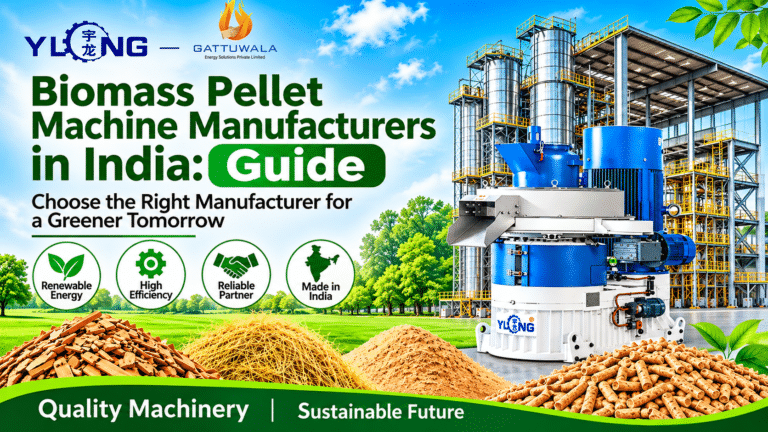
India is moving towards cleaner and more sustainable energy solutions. With increasing demand for renewable fuel, biomass pellets are becoming an important alternative to coal in industrial boilers, thermal power plants and other heating applications. Agricultural waste such as rice straw, mustard husk, soybean husk, groundnut shells, sawdust and cotton stalks can be converted into valuable biomass fuel.
Starting a biomass pellet plant setup in India can be a promising business opportunity for entrepreneurs, farmers, industrial investors and renewable energy companies. However, success depends on selecting the right machinery, raw materials, production capacity and market.
1. Understand the Biomass Pellet Manufacturing Business
A biomass pellet plant converts agricultural and wood waste into small, compressed fuel pellets. These pellets are used in industrial boilers, power plants and heating systems.
The business creates value from agricultural waste while supporting India’s renewable energy goals. Entrepreneurs can start with a small-capacity plant and gradually expand production based on market demand.
2. How Much Does a Biomass Pellet Plant Cost in India?
The investment depends on production capacity, machinery quality, automation, land, electricity requirements and raw material availability.
Indicative investment components include:
Land and factory infrastructure
Biomass processing and grinding machinery
Drying and moisture-control systems
Pellet manufacturing machines
Cooling, screening and packing systems
Electrical panels and installation
Working capital and transportation
The total project cost should be calculated after preparing a detailed project report (DPR). A site-specific quotation is more reliable than a standard investment estimate.
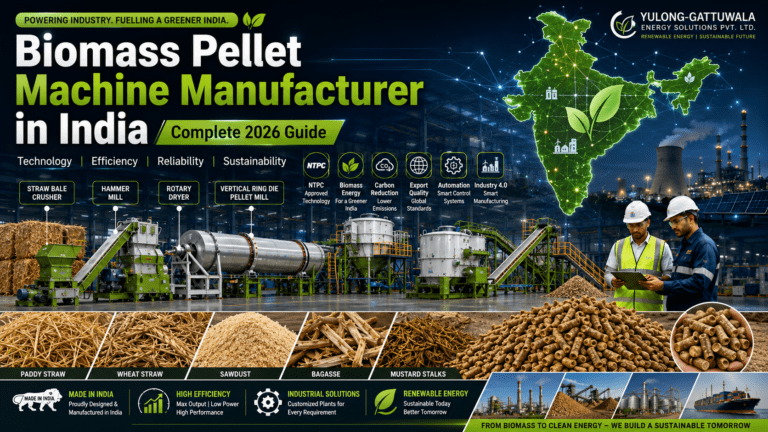
3. Essential Machinery Required for a Biomass Pellet Plant
Choosing the right machinery is one of the most important decisions when planning a biomass pellet plant setup in India.
A standard production line includes:
1. Biomass Crusher: Reduces raw materials into smaller particles.
2. Hammer Mill: Grinds biomass into the required particle size.
3. Rotary Dryer: Controls moisture according to feedstock requirements.
4. Biomass Pellet Machine: Compresses prepared material into uniform pellets.
5. Cooling System: Cools freshly produced hot pellets.
6. Screening Machine: Removes dust and unwanted fines.
7. Packing Machine: Packs finished pellets for storage and transportation.
The machinery configuration should match the type of biomass, moisture level and required production capacity.
4. Biomass Raw Materials Required for Pellet Production
The availability of raw materials directly affects production costs and profitability.
Commonly used materials include:
• Rice husk and paddy straw
• Wheat straw and mustard husk
• Soybean husk and groundnut shells
• Sawdust and wood waste
• Cotton stalks and maize stalks
• Sugarcane bagasse
Before selecting a location, check whether sufficient biomass is available throughout the year. A reliable local supply network can reduce transportation expenses and production interruptions.
5. Profit Potential of a Biomass Pellet Plant
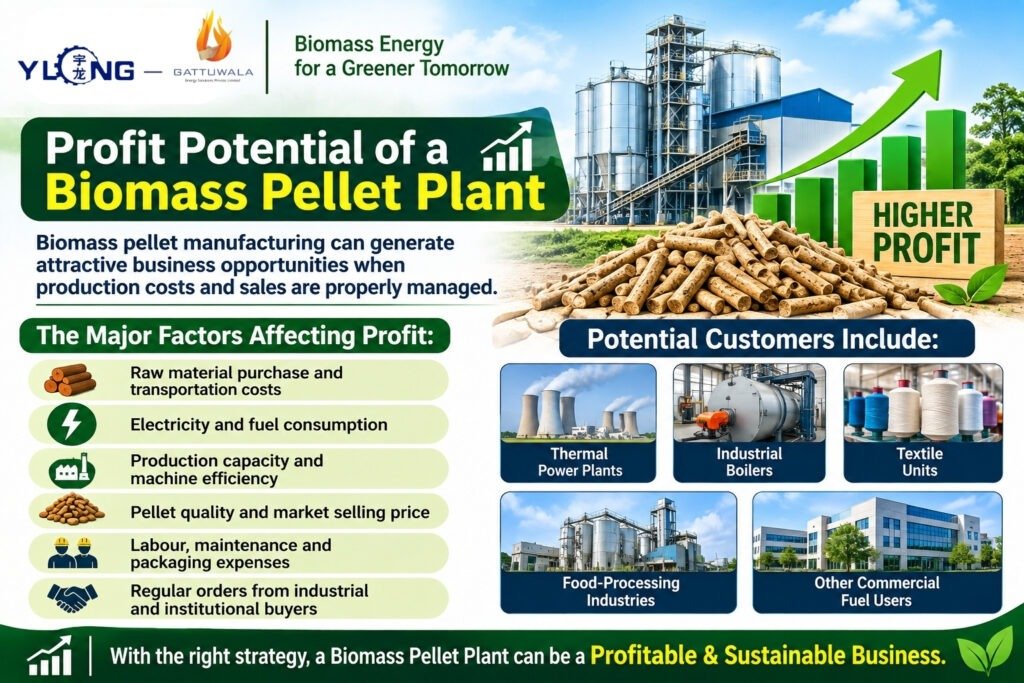
Biomass pellet manufacturing can generate attractive business opportunities when production costs and sales are properly managed.
The major factors affecting profit are:
• Raw material purchase and transportation costs
• Electricity and fuel consumption
• Production capacity and machine efficiency
• Pellet quality and market selling price
• Labour, maintenance and packaging expenses
• Regular orders from industrial and institutional buyers
Potential customers include thermal power plants, industrial boilers, textile units, food-processing industries and other commercial fuel users.
Important: Profitability should be calculated using actual local raw material prices, electricity tariffs, production efficiency and confirmed buyer quotations. Avoid relying on fixed profit-per-tonne claims.
6. Government Subsidy and Financial Assistance
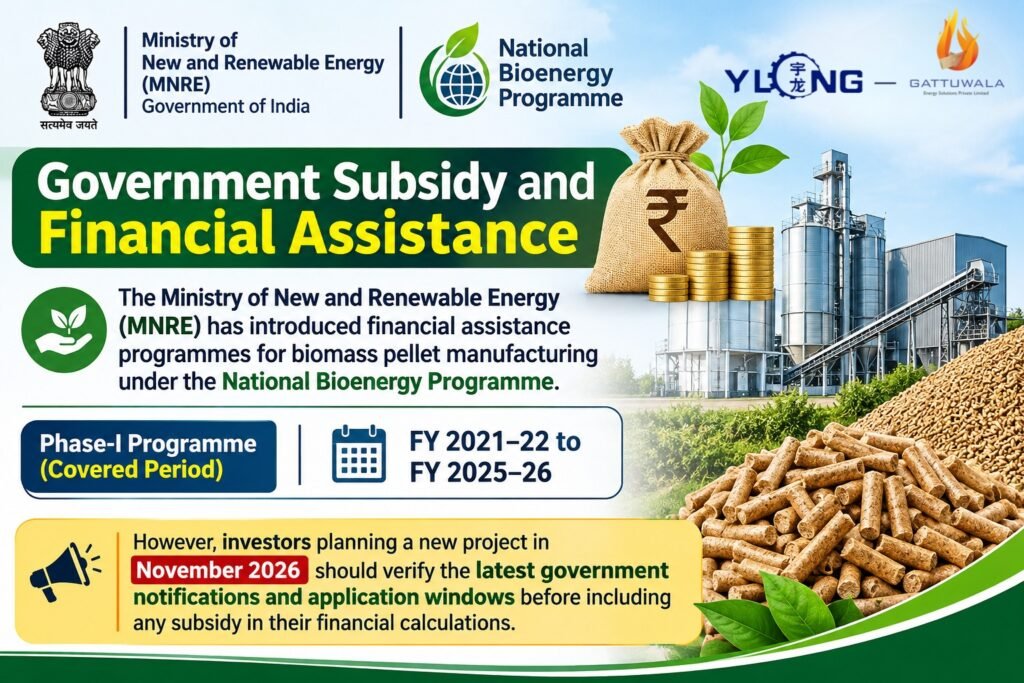
However, the earlier Phase-I programme covered FY 2021–22 to FY 2025–26. Investors planning a new project in November 2026 should verify the latest government notifications and application windows before including any subsidy in their financial calculations.
7. How to Start a Biomass Pellet Plant in India
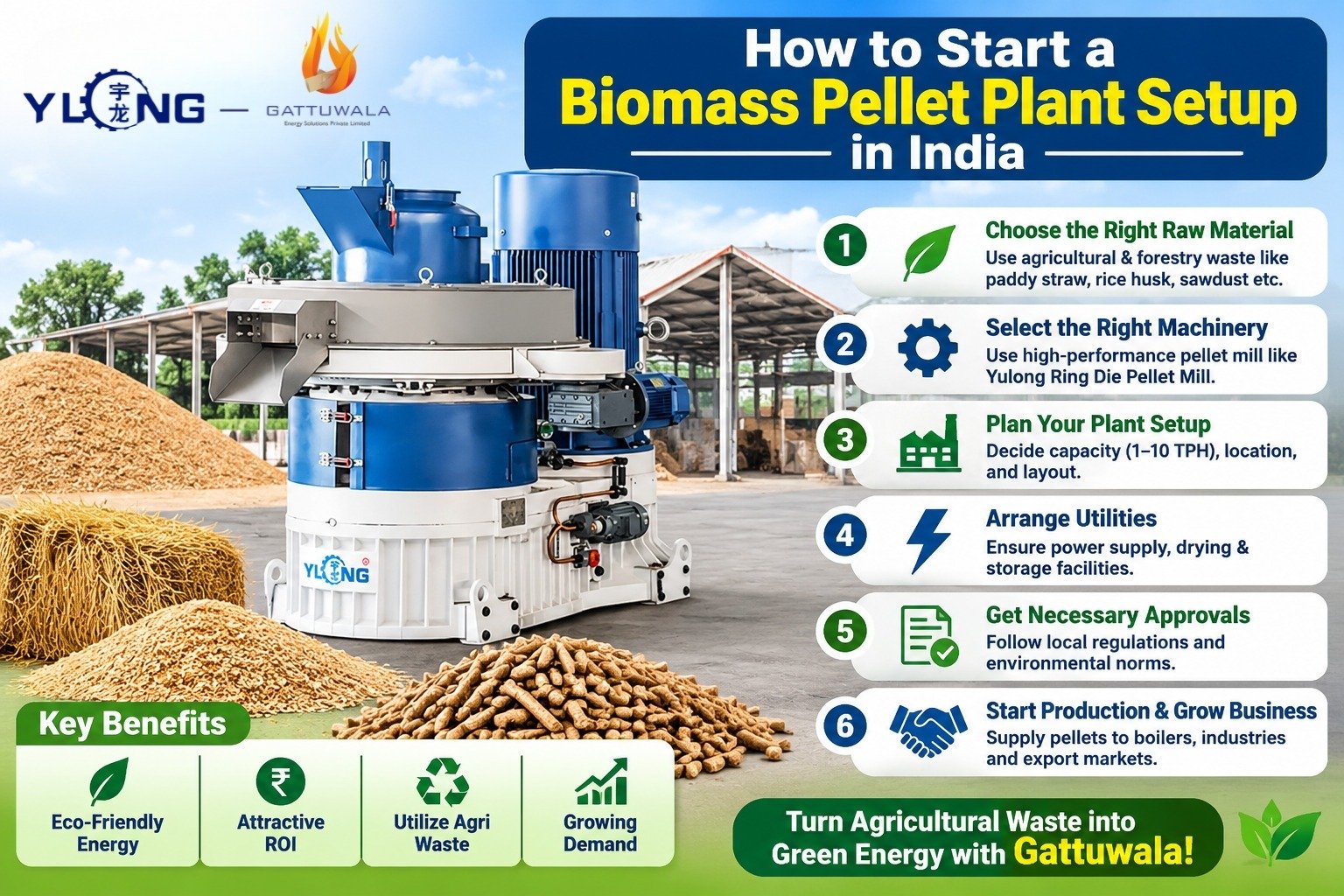
Follow these important steps:
1. Select the plant capacity based on market demand.
2. Identify locally available agricultural and wood waste.
3. Prepare a detailed project report (DPR).
4. Choose suitable pellet manufacturing machinery.
5. Arrange land, electricity and necessary approvals.
6. Install and commission the complete production line.
7. Develop buyer connections and establish regular supply contracts.
Why Choose Gattuwala Energy Solutions?
Gattuwala Energy Solutions Pvt. Ltd. provides biomass pellet plant machinery, complete production line solutions, installation, commissioning and technical support.
With experience in biomass densification and industrial machinery, the company helps entrepreneurs plan projects according to raw material availability, production requirements and business objectives.
Whether you are planning a 1 TPH, 2 TPH, 5 TPH or larger biomass pellet manufacturing unit, selecting the right machinery and technical partner is essential for long-term performance.
Frequently Asked Questions
Investment depends on production capacity, machinery, land, infrastructure, drying requirements and working capital. A detailed DPR is necessary to calculate the project cost.
Rice husk, wheat straw, mustard husk, soybean husk, sawdust, groundnut shells and other agricultural residues are commonly used.
A typical plant requires a crusher, hammer mill, dryer, pellet machine, cooler, screening machine and packing system.
It can be profitable when raw materials are available at competitive prices, machinery operates efficiently and regular buyers are secured.
It can be profitable when raw materials are available at competitive prices, machinery operates efficiently and regular buyers are secured.
Pellet Machine Manufacturer in India: Complete 2026 Guide
Top Biogas Plant Manufacturers in India 2026 | Gattuwala Guide