- July 30, 2026
Biomass Pellet Machine Price India | Plant Cost & ROI
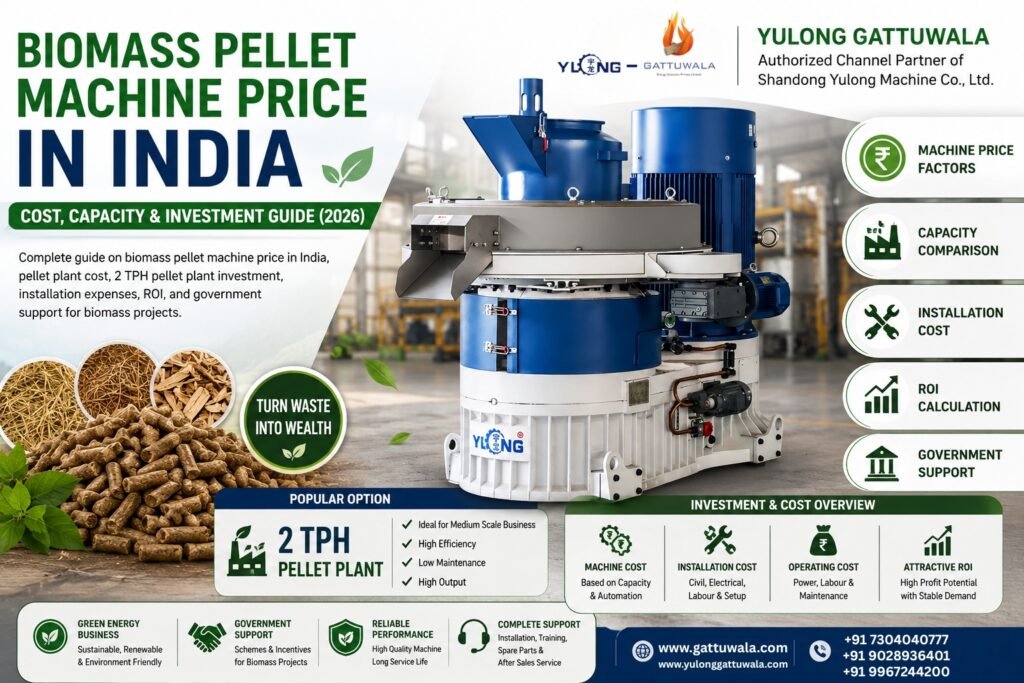
Biomass Pellet Machine Price in India: Market Overview
Pellet Machine Price India India’s renewable energy sector is experiencing rapid growth, making biomass pellets one of the most profitable green energy businesses. Industries, thermal power plants, and commercial boilers are increasingly adopting biomass fuel pellets to reduce carbon emissions and fuel costs. As demand continues to rise, many entrepreneurs are searching for the biomass pellet machine price India to understand the total investment required for setting up a successful pellet manufacturing plant.
The overall cost of a biomass pellet plant depends on production capacity, raw material type, automation level, installation requirements, and infrastructure. Whether you are planning a 2 TPH pellet plant or a large industrial production line, understanding the complete investment is essential before making a decision.
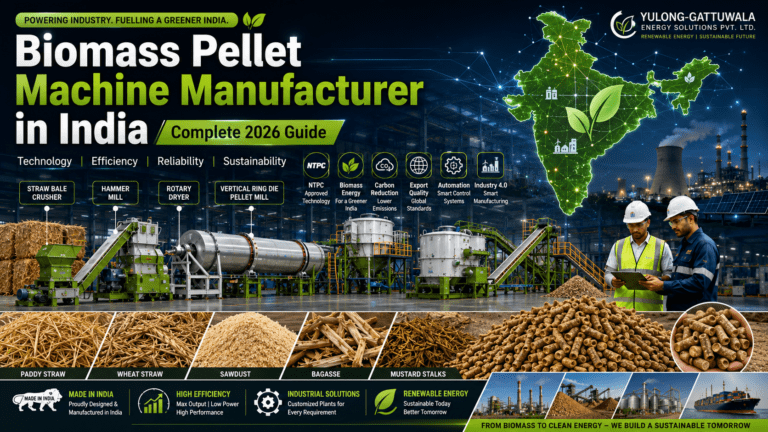
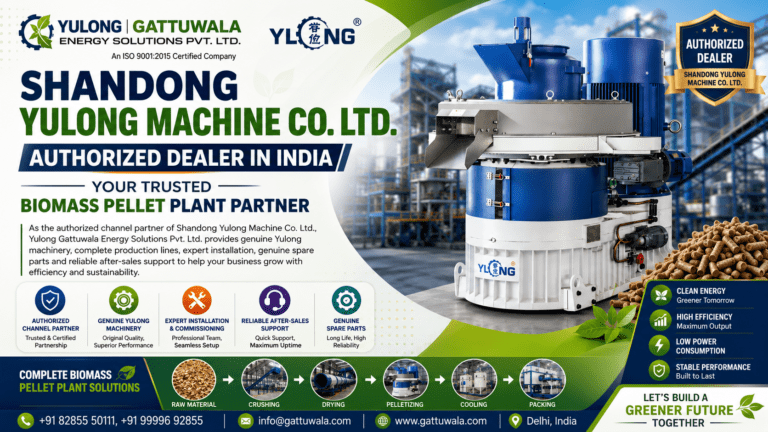
Yulong Gattuwala, the authorized channel partner of Shandong Yulong Machine Co., Ltd. in India, provides complete biomass pellet plant solutions, helping businesses select the right machinery based on production requirements and budget.
Factors Affecting Pellet Machine Price India
India generates millions of tons of agricultural waste every year, including rice husk, paddy straw, sugarcane bagasse, sawdust, bamboo waste, cotton stalks, and other biomass materials. Instead of burning these residues, they can be converted into high-quality biomass pellets that are widely used by:
• Thermal Power Plants
• Industrial Boilers
• Cement Industries
• Textile Industries
• Food Processing Plants
• Chemical Industries
With increasing government focus on clean energy and biomass co-firing, pellet manufacturing has become one of India’s fastest-growing renewable energy businesses.
Pellet Machine Price India: Installation Cost Breakdown
The biomass pellet machine price India varies significantly depending on several important factors.
1. Production Capacity
Machine capacity is one of the biggest price factors.
Typical capacities include:
• 1 TPH Pellet Plant
• 2 TPH Pellet Plant
• 5 TPH Pellet Plant
• 10 TPH Pellet Plant
• 15 TPH and above
Higher-capacity machines require larger motors, advanced automation, and stronger mechanical components, increasing the overall investment.
2. Raw Material Type
Different biomass materials require different processing systems.
Examples include:
• Sawdust
• Rice Husk
• Paddy Straw
• Bagasse
• Cotton Stalk
• Bamboo Waste
• Groundnut Shell
• Mustard Stalk
Machines processing harder materials generally require more robust pellet presses and hammer mills.
3. Machine Quality
Premium pellet machines use:
• Heavy-duty alloy steel
• Vertical ring die technology
• High-efficiency gearboxes
• Energy-efficient motors
• Automatic lubrication systems
Although the initial investment is higher, these machines deliver better pellet quality, lower maintenance, and longer service life.
4. Automation Level
The pellet plant cost also depends on automation.
Plants may include:
• Automatic feeding
• PLC control systems
• Moisture monitoring
• Cooling system
• Packing machine
• Automatic conveyor systems
Higher automation reduces labor costs and increases productivity.
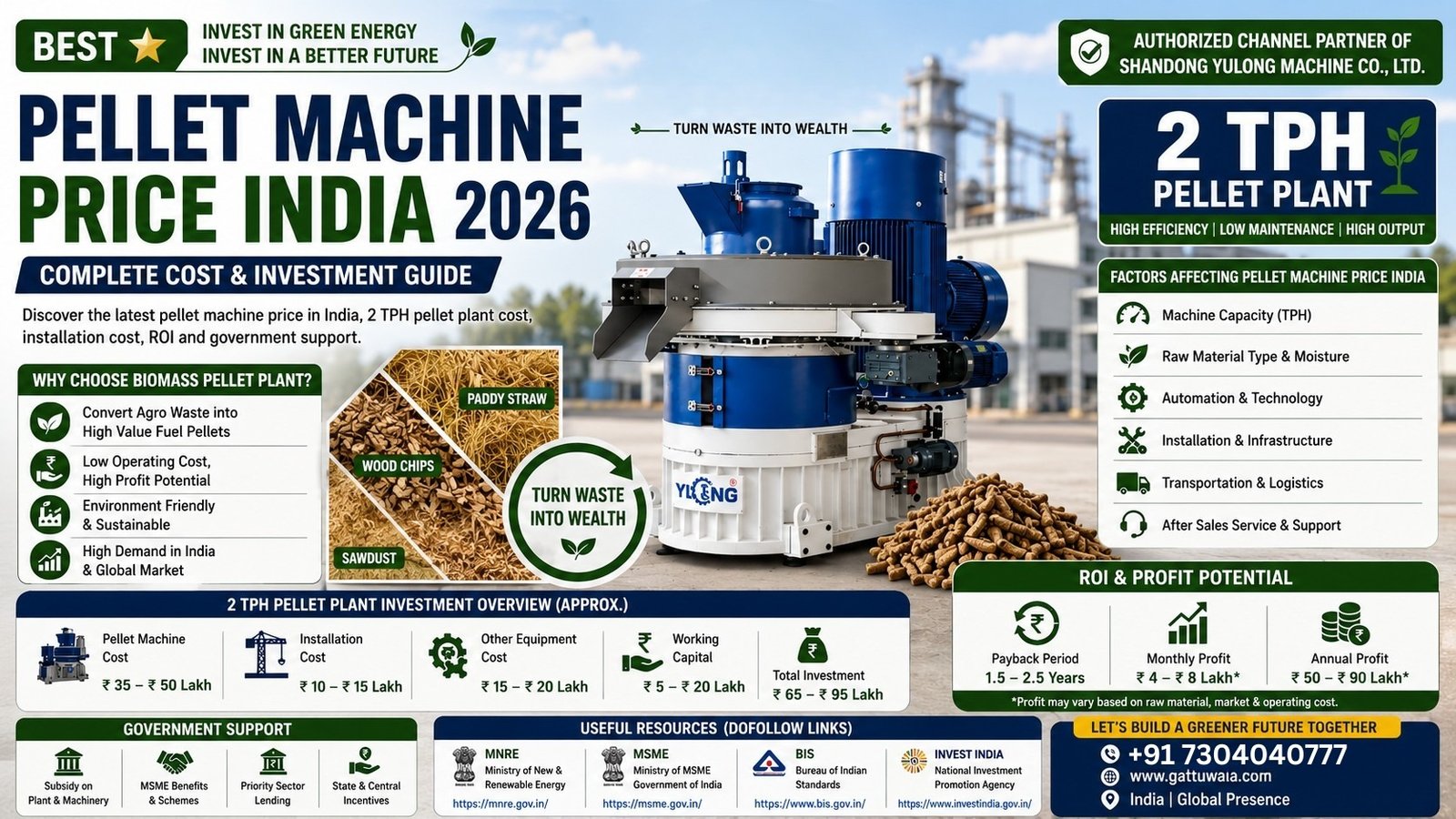
2 TPH Pellet Plant Cost Overview
A 2 TPH pellet plant is one of the most popular choices for medium-sized investors.
It generally includes:
• Hammer Mill
• Rotary or Flash Dryer
• Pellet Machine
• Cooler
• Screening Machine
• Packing Machine
• Conveyors
• Electrical Control Panel
A 2 TPH plant offers an excellent balance between investment and production capacity, making it suitable for supplying industrial customers, commercial boiler operators, and biomass fuel distributors.
Installation Cost of a Biomass Pellet Plant
Besides machinery, investors should also consider installation-related expenses.
These include:
• Factory shed construction
• Electrical infrastructure
• Transformer installation
• Civil foundation
• Raw material storage
• Finished goods warehouse
• Labor and commissioning
• Transportation and unloading
Proper plant layout planning can significantly improve operational efficiency and reduce future maintenance costs.
Biomass Pellet Plant ROI Calculation
One of the biggest advantages of investing in biomass pellet production is the attractive return on investment.
ROI depends on several factors:
• Raw material availability
• Production capacity
• Machine efficiency
• Electricity consumption
• Labor costs
• Pellet selling price
• Plant utilization rate
A well-managed 2 TPH pellet plant operating with consistent raw material supply and reliable buyers can achieve healthy profitability over time. Working with experienced suppliers also helps reduce downtime and improve operational performance.
Government Support for Biomass Pellet Plants
The Government of India continues to encourage biomass energy projects through various renewable energy initiatives.
Depending on the state and applicable schemes, businesses may benefit from:
• MSME support programs
• Renewable energy incentives
• State industrial subsidies
• Financial assistance through eligible schemes
• Support for biomass-based manufacturing projects
Entrepreneurs should check the latest policies and eligibility criteria before starting their investment to maximize available benefits.
Why Choose Yulong Gattuwala?
Yulong Gattuwala provides complete turnkey biomass pellet plant solutions designed for long-term industrial performance.
Key advantages include:
• Authorized partner of Shandong Yulong Machine Co., Ltd.
• Complete plant design and engineering
• High-performance vertical ring die pellet machines
• Professional installation and commissioning
• Genuine spare parts availability
• Technical training and after-sales support
• Capacity planning from small to large industrial plants
The company also offers expert guidance on selecting the right production capacity, estimating project costs, and planning efficient pellet manufacturing operations.
Understanding the biomass pellet machine price India is the first step toward building a successful biomass pellet manufacturing business. The total pellet plant cost depends on machine capacity, automation, raw material, installation, and infrastructure. Whether you are considering a 2 TPH pellet plant or a larger production line, careful planning and the right technology can deliver long-term profitability.
With growing demand for renewable fuel and increasing industrial adoption of biomass pellets, now is an ideal time to invest in a modern pellet plant. Yulong Gattuwala helps businesses plan, install, and operate efficient biomass pellet production facilities with reliable technology and complete project support.

Asia’s No.1 Biomass Pellet Machine | Yulong-Gattuwala