

Gas Producer Plant Instrumentation | Gattuwala Group
Smart Monitoring and Automation Solutions for Industrial Gas Producer Plants
Improve plant visibility, operational monitoring, and process control with industrial instrumentation solutions.
Gas producer plant instrumentation supports the monitoring of important operating parameters, including temperature, pressure, gas flow, gas composition, and equipment status. When integrated with appropriate control systems, these instruments help operators monitor processes, identify abnormal operating conditions, and support efficient plant operation.
From process instrumentation and control panels to PLC/SCADA integration and operational monitoring, the right system depends on the plant configuration, process requirements, and applicable safety standards.
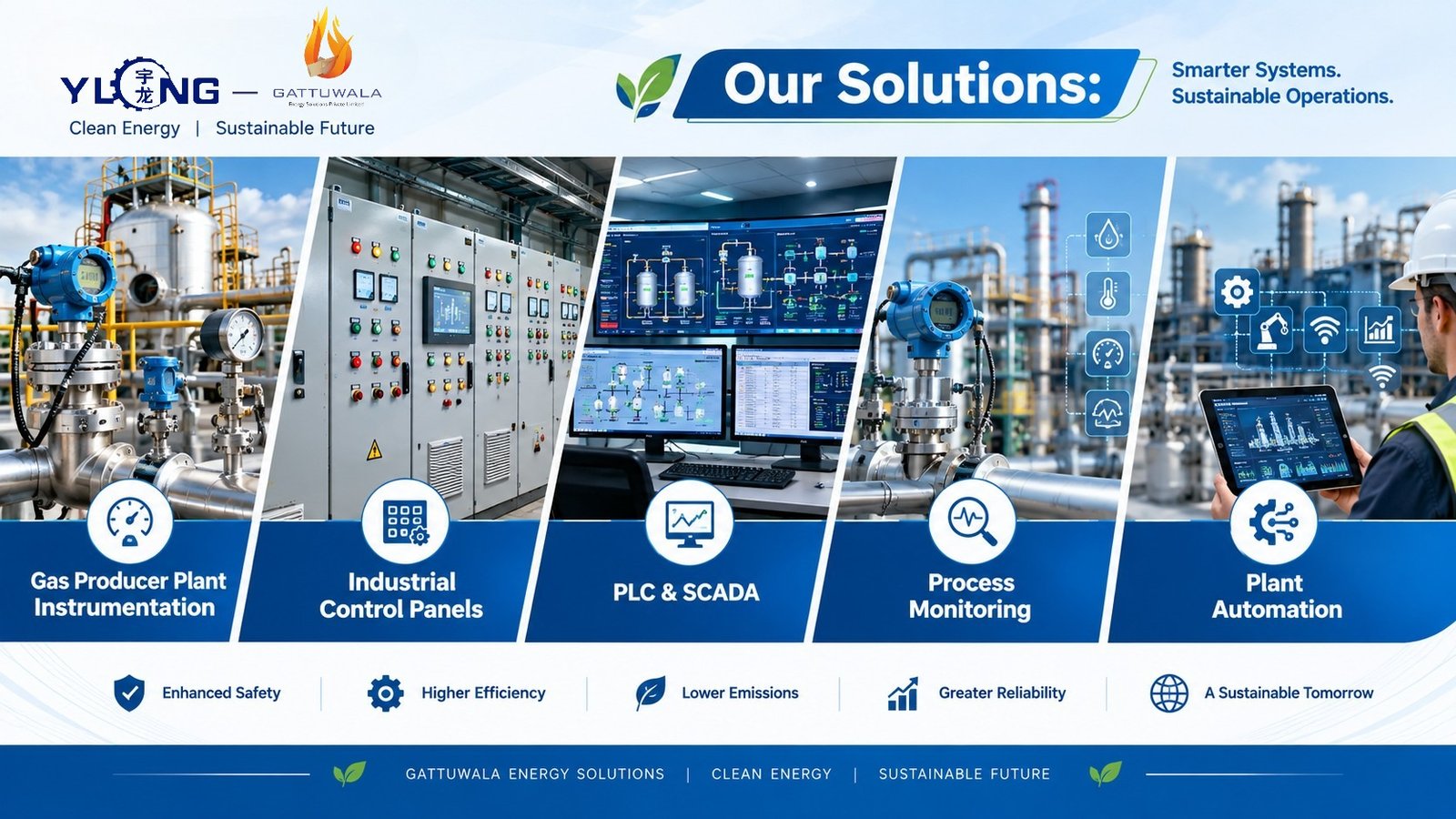
Our Solutions: Gas Producer Plant Instrumentation | Industrial Control Panels | PLC & SCADA | Process Monitoring | Plant Automation
What Is Gas Producer Plant Instrumentation?
Gas Producer Plant Instrumentation refers to the instruments, sensors, control devices, and monitoring systems used to observe and manage the operation of a gas producer plant.
A typical gas producer system converts suitable carbon-containing feedstock into producer gas through a controlled gasification process. Instrumentation helps operators monitor operating conditions and maintain the process within its specified operating limits.
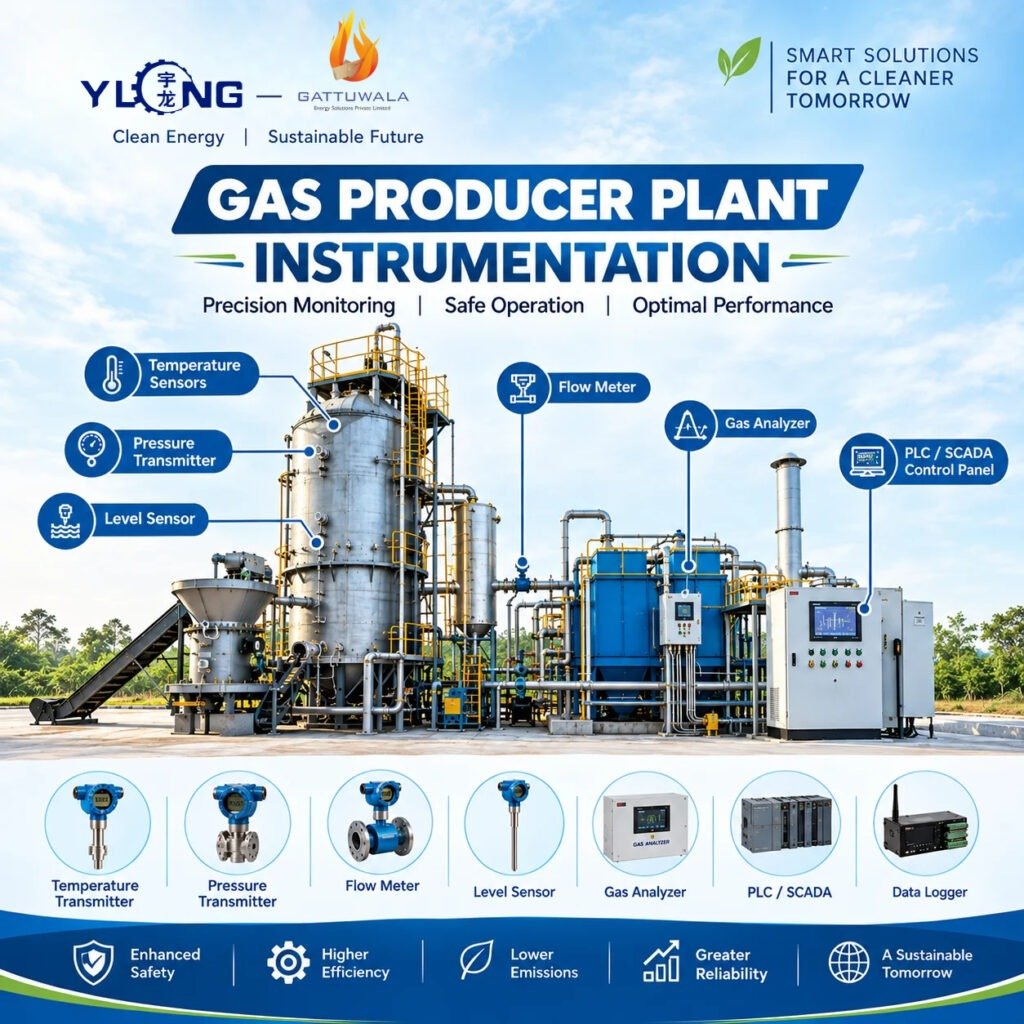
Depending on the plant design, instrumentation may include temperature sensors, pressure transmitters, flow meters, gas analyzers, level sensors, alarms, and automated control systems.
Key Instrumentation and Control Solutions
1. Temperature and Pressure Monitoring
Temperature and pressure instruments measure operating conditions at selected points in the gasification and gas-treatment systems. Reliable measurements help operators identify deviations and maintain process stability.
2. Producer Gas Flow Measurement
Gas flow meters measure gas movement through selected process lines. Flow information can support process monitoring, equipment evaluation, and operational reporting.
3. Gas Composition and Quality Analysis
Suitable gas analyzers can measure selected components, such as carbon monoxide, hydrogen, methane, carbon dioxide, and oxygen, depending on the application. Gas composition monitoring helps assess gas quality and supports safe operating procedures.
4. PLC-Based Automation
Programmable Logic Controllers (PLCs) can coordinate selected plant functions, receive instrument signals, activate alarms, and execute control sequences based on the approved process design.
5. SCADA and HMI Monitoring
Supervisory Control and Data Acquisition (SCADA) systems and Human-Machine Interfaces (HMIs) can present plant parameters, trends, equipment status, and alarms on an operator screen.
6. Industrial Control Panels
Industrial control panels integrate appropriate controllers, electrical components, signal interfaces, and operator controls to support plant operation. Panel specifications depend on equipment requirements and the plant’s electrical and safety design.
How Gas Producer Plant Instrumentation Works
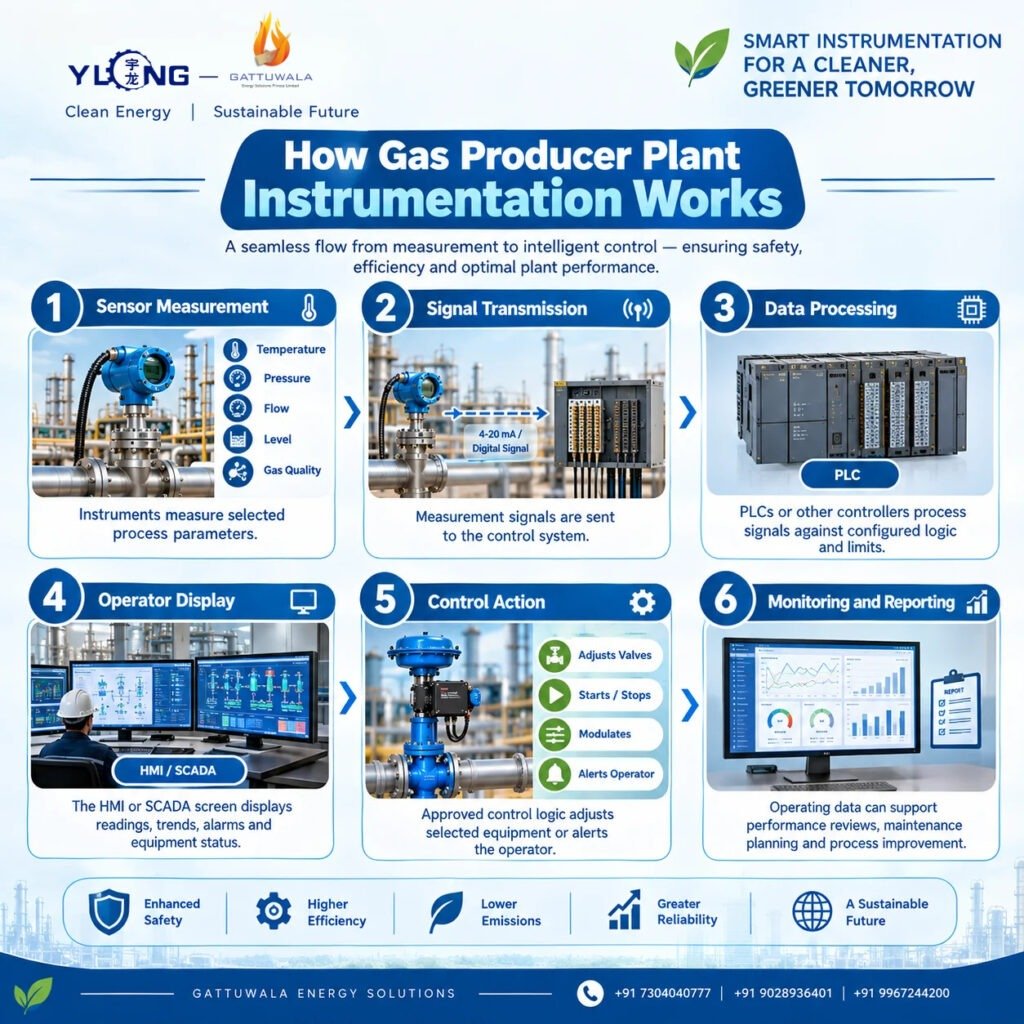
A typical instrumentation and monitoring sequence includes:
Sensor Measurement: Instruments measure selected process parameters.
Signal Transmission: Measurement signals are sent to the control system.
Data Processing: PLCs or other controllers process signals against configured logic and limits.
Operator Display: The HMI or SCADA screen displays readings, trends, alarms, and equipment status.
Control Action: Approved control logic adjusts selected equipment or alerts the operator.
Monitoring and Reporting: Operating data can support performance reviews, maintenance planning, and process improvemen
The actual sequence varies according to plant configuration and the control philosophy. Critical protective functions must be designed and validated separately where required.
Applications of Industrial Gas Producer Instrumentation
Gattuwala Group brings a project-oriented approach to industrial and renewable-energy solutions.
Biomass gasification plants
Industrial gasification systems
Producer gas generation units
Biomass and agricultural-residue processing facilities
Industrial heating systems using producer gas
Gas cleaning and conditioning systems
Industrial process monitoring and automation
Equipment selection must consider feedstock characteristics, gas composition, operating conditions, hazardous-area requirements, and the intended gas application.
Why Choose Gattuwala Group?
Gattuwala Group works across industrial and renewable-energy project areas. For instrumentation-related enquiries, project requirements can be evaluated to identify suitable monitoring and automation options.
Application-Based Planning: Assess instrumentation requirements according to the process.
Process Monitoring: Identify appropriate measurement points for key operating parameters.
Automation Integration: Evaluate PLC, HMI, and SCADA integration requirements.
Equipment Coordination: Define suitable instruments and control components within the agreed project scope.
Industrial Project Support: Coordinate technical discussions and project requirements.
Safety-Oriented Design: Consider relevant process safety, electrical, and environmental requirements.
Specific supply, engineering, installation, and commissioning services should be confirmed according to the agreed project scope.
Frequently Asked Questions
Common instruments include temperature sensors, pressure transmitters, flow meters, gas analyzers, level sensors, and equipment-status indicators. The exact selection depends on the process design.
A PLC processes instrument signals and executes configured control logic to coordinate plant functions, display equipment status, and generate alarms.
A PLC primarily executes control logic and interfaces with field devices. SCADA provides supervisory monitoring, visualization, data collection, alarms, and historical trends across the connected system.
Producer gas composition affects its heating value, combustion characteristics, downstream suitability, and safety requirements. Appropriate gas analysis helps operators assess gas quality.
Remote monitoring may be possible through appropriately designed control and communication systems. It requires suitable network security, access controls, system compatibility, and operational safeguards.
Begin with the process flow diagram, operating pressure and temperature, gas composition, required measurement ranges, control objectives, hazardous-area classification, and applicable standards. A qualified engineering team can use this information to develop the instrumentation specification.
Contact Gattuwala Group
Planning a new gas producer plant or looking to improve industrial process monitoring and automation?
Contact Gattuwala Group to discuss your plant requirements and explore suitable instrumentation and control-system options.
Gattuwala Group
Industrial Energy Solutions | Gasification | Process Instrumentation | Industrial Automation
