

- July 28, 2026
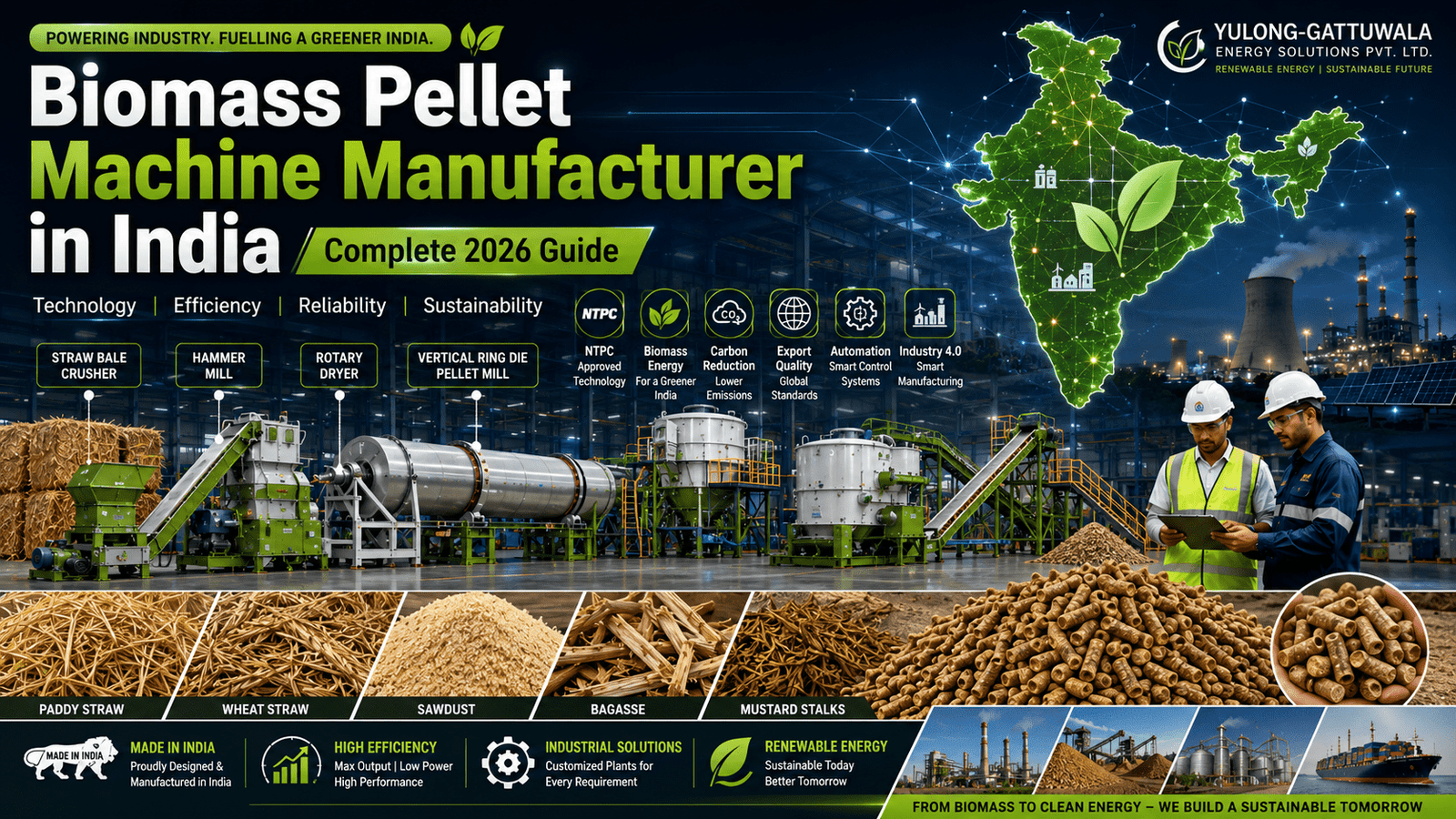
Biomass Pellet Machine Manufacturer in India: Complete 2026 Guide
India’s top pellet machine manufacturer in India: Gattuwala Machineries, Delhi. See pellet machine types, uses & benefits, hammer mills & dryers.
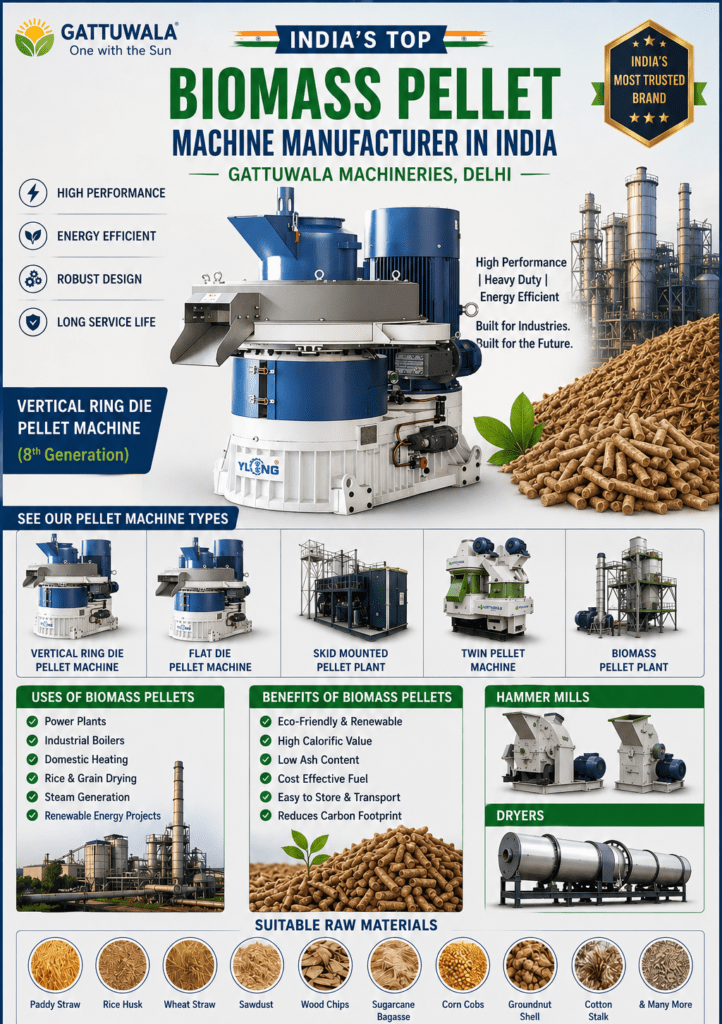
This guide walks through how biomass pellet machines work, the equipment that makes up a complete production line, the raw materials you can use, and what to look for in a pelleting machine manufacturer in India before you invest.
Why Choose a Pellet Machine Manufacturer in India ✅
The best pellet machine manufacturer in India offers machines suitable for wood chips, rice husk, bagasse, sawdust, and agricultural residues.
A biomass pellet machine compresses loose agricultural or industrial residue — straw, husk, sawdust, stalks — into dense, uniform pellets. These pellets burn more efficiently than raw biomass, are easier to store and transport, and serve as a renewable substitute for coal and other fossil fuels in boilers, furnaces, and thermal plants.
Modern pelleting machines rely on ring die or flat die compression technology. A vertical ring die pellet machine, for instance, feeds raw material through a rotating die under high pressure, extruding it into cylindrical pellets that are then cooled and packed. With the right setup, a single line can process anywhere from a few tons to over 100 metric tons of input material per day.
Quality Standards for Pellet Production
India generates enormous volumes of agricultural residue every year — paddy straw, rice husk, mustard husk, cotton stalks, and bamboo waste, much of which is otherwise burned in open fields, contributing to air pollution. Converting this residue into biomass pellets:
• Reduces crop-residue burning and the associated air quality crisis
• Creates a renewable fuel source for boilers, biogas units, and thermal power plants
• Supports India’s net-zero carbon emission goals
• Adds a new revenue stream for farmers and agro-industries
• Cuts industrial fuel costs compared to coal or diesel
Core Equipment in a Pellet Production Line
A complete pellet plant is rarely just one machine — it’s a coordinated line of equipment, each handling a different stage of processing.
1. Pelletizing Equipment
The heart of the plant. A vertical ring die pellet machine or briquette machine compresses processed biomass into final pellets or briquettes, with options for high-output, energy-efficient, and compact configurations depending on plant size.
2. Size-Reduction Machines
Before biomass can be pelletized, it needs to be broken down to a uniform particle size:
• Hammer mills and X-type hammer mills grind raw material into consistent, fine particles
• Turbo hammer units offer enhanced grinding with lower power consumption
• Drum wood chippers handle heavy-duty chipping of wood waste at scale
• Shredders process a wide range of bulkier industrial and agricultural material
3. Drying Systems
Moisture content is critical to pellet quality. Rotary drum dryers and flash dryers remove excess moisture quickly and uniformly, ensuring pellets hold their shape and burn efficiently.
4. Auxiliary Systems
Supporting equipment ties the whole line together:
• Automatic feeding units for consistent, labor-free material flow
• Counter flow cooling sections to cool pellets before packing
• Packing machines for fast, automated bagging
• Bag filters for dust collection and a cleaner plant environment
• Connecting conveyors for seamless material transport between stages
Understanding how these machines work together helps first-time buyers plan a plant that matches their raw material volume, budget, and production goals — rather than buying equipment piecemeal.
Raw Materials Used in Biomass Pellet Production
One advantage of modern pelleting technology is its flexibility across feedstocks. Common raw materials processed into biomass pellets in India include:
• Paddy straw
• Rice husk
• Mustard husk
• Cotton stalks
• Bamboo
• Sawdust and wood waste
Each material behaves differently under compression, which is why experienced manufacturers calibrate die specifications and processing parameters to the specific biomaterial a client plans to use.
Industries That Rely on Biomass Pellets
Biomass pellets aren’t limited to a single use case. Industries sourcing pellets as fuel or raw material include:
- Food processing — for steam boilers and drying operations
- Pharmaceuticals — for consistent, clean-burning thermal energy
- Textiles — replacing coal in dyeing and finishing units
- Steel and chemical plants — for furnace and process heat
- Biogas and thermal power plants — as a renewable fuel input
- Paper manufacturing and boiler industries — for consistent combustion fuel
This breadth of demand is a major reason biomass pellet machine manufacturers are expanding capacity across Gujarat and other Indian states.
How to Choose a Biomass Pellet Machine Manufacturer in India
Not all pelleting machine suppliers offer the same reliability. Before signing a purchase order, evaluate manufacturers on:
1. Engineering track record — Look for a company with a long history in industrial machinery, not just a few years in biomass specifically.
2. Input capacity range — Confirm the machine can handle your required tonnage (some Indian manufacturers now offer input capacities up to 120 MT).
3. Technology used — Vertical ring die systems with syn-gas reuse can lower operating costs significantly over time.
4. Turnkey capability — Can the manufacturer supply a complete production line — hammer mills, dryers, conveyors, packing — or only a single machine?
5. After-sales service — Biomass plants run continuously; a manufacturer offering strong technical support and spare parts availability matters as much as the machine itself.
6. Pan-India delivery and installation — Especially important if your plant is outside the manufacturer’s home state.
Yulong Gattuwala: Engineering Excellence Meets Renewable Innovation
Yulong Gattuwala(Yulong Gattuwala Energy Solutions Pvt Ltd), based near Delhi, Akola, Raipur, Indore brings with over 20 years of dedicated biomass and renewable energy innovation. The company designs and manufactures a full range of biomass processing equipment — from vertical ring die pellet machines and briquette machines to hammer mills, drum wood chippers, rotary drum dryers, and complete turnkey pellet and torrefaction plants — serving customers across India in food, pharma, textile, steel, chemical, and thermal power sectors.
With input capacities up to 120 MT and a focus on cost-effective, high-capacity technology, Yulong Gattuwala positions itself as a pioneer in production-cost control for biomass pelletizing — helping businesses convert agricultural and industrial waste into a reliable, revenue-generating renewable fuel.
Frequently Asked Questions
A pellet machine produces small, dense cylindrical pellets (typically 6–12mm) suited for automated boiler feeding, while a briquette machine produces larger blocks often used in furnaces and manual-feed systems.
Common feedstocks include paddy straw, rice husk, mustard husk, cotton stalks, bamboo, and sawdust — though the ideal machine setup depends on the specific material’s moisture and fiber content.
Capacity varies by machine and configuration; industrial-scale vertical ring die pellet machines in India can handle input capacities of up to 120 metric tons.
Established manufacturers, including Satyajit Machineries, supply full turnkey production lines — pelletizing, size-reduction, drying, cooling, and packing equipment — rather than standalone machines.Yes — biomass pellets typically cost less than coal, and pellet production converts otherwise-burned agricultural residue into a marketable renewable fuel, creating an added revenue stream while supporting India’s net-zero emissions goals.
Established manufacturers, including Satyajit Machineries, supply full turnkey production lines — pelletizing, size-reduction, drying, cooling, and packing equipment — rather than standalone machines.
Biomass pelleting sits at the intersection of waste management, renewable energy, and industrial cost savings — a rare combination that explains its rapid growth across Indian industry. Whether you’re setting up a small pellet unit or a full turnkey torrefaction plant, working with an experienced biomass pellet machine manufacturer in India ensures your equipment is engineered for your specific raw material, capacity, and industry requirements.
